




Choosing a scuba regulator for Sydney water: what to look for and what to skip


You've spent a season hiring gear for Sydney shore dives, and now you're pricing a scuba regulator of your own. The sets run from about $450 to over $4,000, and the spec sheets don't tell you why.
For Sydney diving, the features that change how a regulator breathes are a balanced first stage and a balanced second stage. They keep the effort of each breath steady as your tank empties and as you go deeper. An environmentally sealed first stage is worth paying for if you shore dive often, because it keeps sand, silt, and salt out of the mechanism. A cold-water rating is not something Sydney water normally calls for, and the cheapest unbalanced sets are the thing to skip if you dive often or deep.
What does a scuba regulator do?
A scuba regulator is two pressure-reducing devices joined by a hose. The first stage clamps or screws onto the tank valve and drops the tank pressure to an intermediate pressure, a steady in-between pressure that Scubapro's regulator manual puts at about 9.5 bar.
The second stage is the part in your mouth. It takes the intermediate pressure down to the pressure of the water around you, and it only gives you air when you breathe in.
The first stage also carries the ports for the rest of your kit. Low-pressure ports feed the octopus and the BCD inflator hose. A high-pressure port feeds a pressure gauge or a wireless transmitter.
Do you need a sealed or cold-water regulator for Sydney?
For the cold, usually not. The European regulator standard, EN 250, defines cold water as below 10°C, and Scubapro's manual says a regulator suited to cold water is needed once you dive below that temperature. Sydney water runs at around 14 to 17 degrees in winter and 23 to 25 degrees in January and February, so it normally sits above the line.
Normally is the right word. Sydney's thermocline, the layer where surface water meets colder water beneath, often sits around 10 to 15 metres, and below it the water can be several degrees colder. The surface reading isn't the whole story on a deep winter dive.
Where sealing earns its money in Sydney is grit, not cold. An environmentally sealed first stage keeps water, salt, silt, and sand away from the moving parts. Atomic describes its sealed first stages as factory-sealed against silt and sand, and Oceanic says its seal keeps outside contaminants off the valve.
That matters if you shore dive often. Shelly Beach at Manly and Clifton Gardens are both walk-ins from the sand, and our guide to Sydney's best shore dives covers both. For a regulator that crosses the shallows every weekend, sealing is a durability argument, not a safety requirement. If you only dive Sydney in summer and travel to warm water, you have even less reason to pay for it.
Piston or diaphragm, balanced or unbalanced: what changes underwater
Balanced means the design uses the air pressure itself to cancel out the forces inside the valve, so it can use lighter parts and respond the same way whatever the tank pressure. Scubapro's manual describes three first stage designs:
- Standard (unbalanced) piston. The simplest first stage regulator, with the fewest moving parts. It's reliable and cheap to look after, but it lacks the balancing that holds delivery steady as the tank drains.
- Balanced piston. Delivers more air to the second stage than any other design, and its performance is unaffected by falling tank pressure. The last third of the tank breathes like the first.
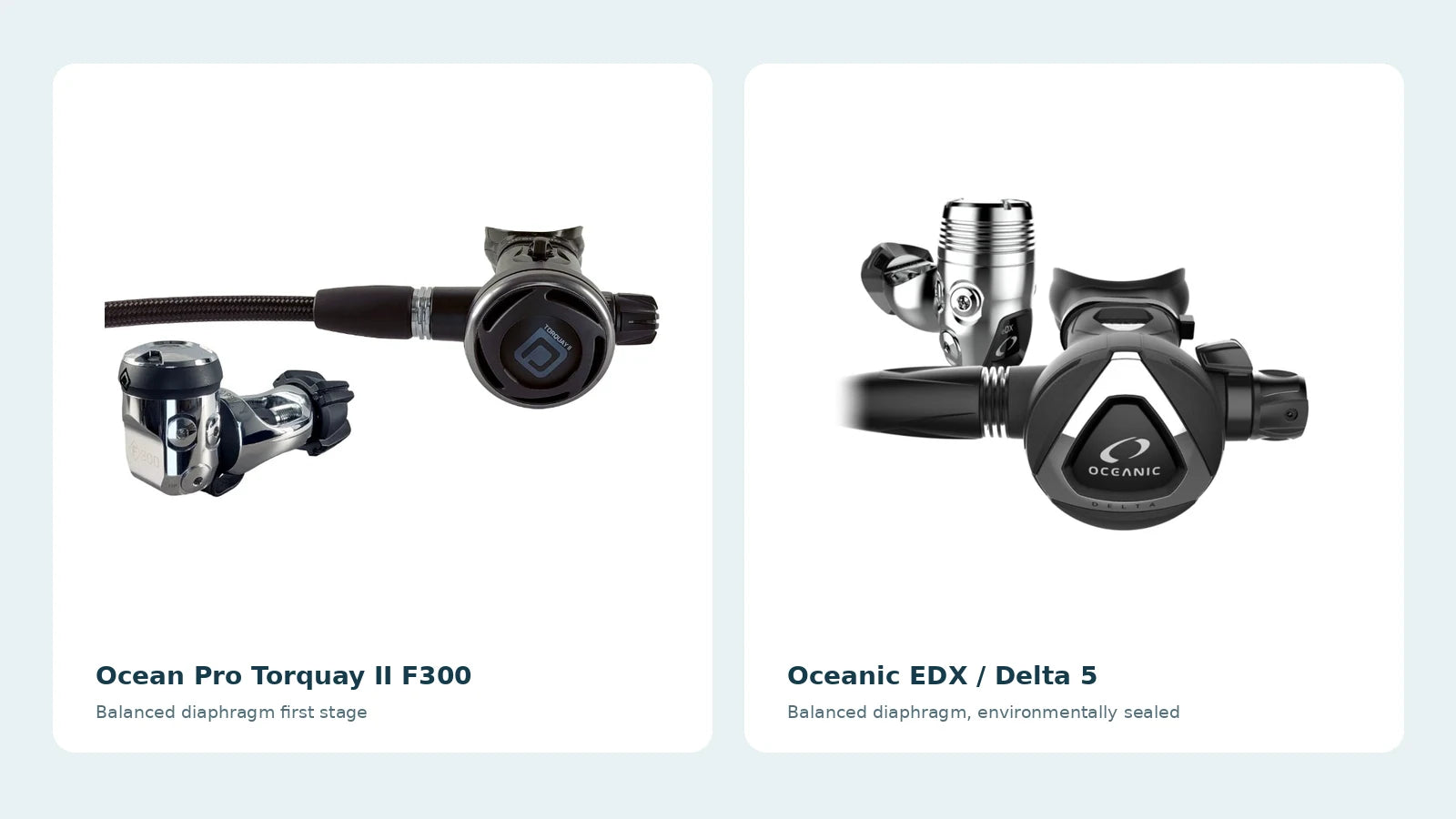
- Balanced diaphragm. A flexible diaphragm controls the air, and the working parts sit behind it, cut off from the water. That isolation makes a diaphragm a common route to a sealed first stage. Flow is slightly lower than a piston's, though Scubapro says the difference only shows at great depth.
The second stage can be balanced or unbalanced too. A balanced one uses a lighter spring, and Scubapro's listings say its air-balanced second stages smooth out the effort to breathe at varying depths and tank pressures. That effort is what divers call work of breathing. An unbalanced second stage is simpler and cheaper.
Sealing isn't tied to one design. Atomic's ST1 is a balanced piston first stage, and it comes freeze-protected and factory-sealed. Scubapro's MK25 EVO is a balanced piston that Scubapro doesn't call sealed: its XTIS system thermally insulates the mechanism to stop ice forming around the moving parts.
DIN or yoke: which fitting do you need?
A yoke first stage clamps over the tank valve with a screw, and a DIN first stage screws straight into the valve. Many regulators in the range come in either fitting, and the listings give the yoke version a 232 bar rating and the DIN 300 bar. Match the regulator to the tanks you'll fill and dive, and our scuba tank guide covers the fitting question from the cylinder side.
What comes in a scuba regulator set?
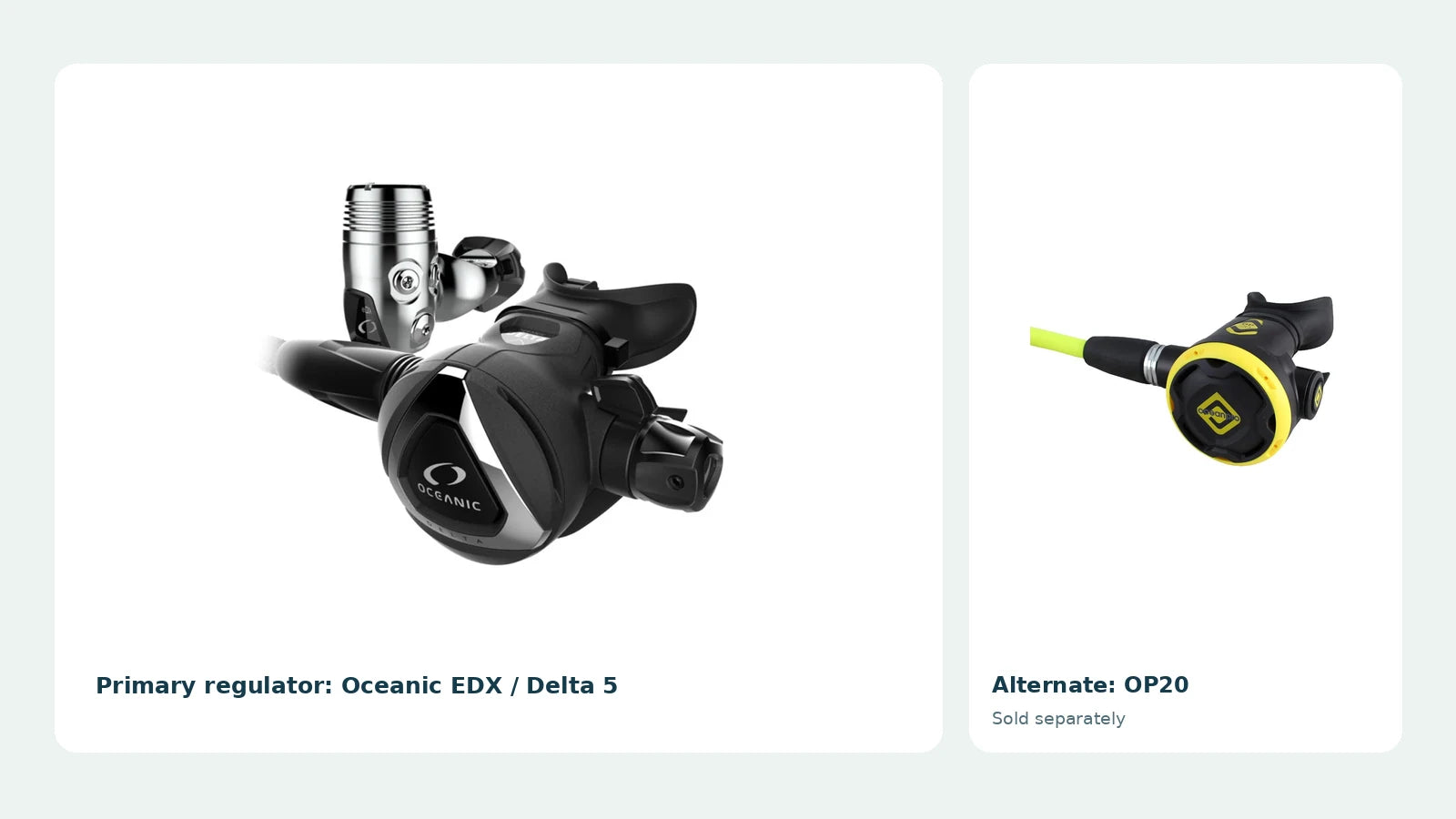
A complete scuba regulator set has four parts: a first stage, a primary second stage, an alternate air source, and a way to read your tank pressure. The alternate is usually an octopus, a spare second stage on a longer hose, often bright yellow, for a buddy who runs low on air.
Some divers use an inflator regulator instead, which combines the backup second stage with the BCD inflator. The Scubapro AIR2 ($399) and the Atomic SS1 ($799.95) both work this way.
For tank pressure, the choice is a gauge on a high-pressure hose or a wireless transmitter paired to an air-integrated dive computer. That decision sits with your computer, and our dive computer buyer's guide works through it.
Read the listing before you compare prices. Several diving regulator sets in the range are a first and second stage only, with the octopus sold separately at $189 to $480. Two prices that look alike can buy different amounts of kit.
Should you hire a regulator or buy one?
Hire while you're still working out how often you dive, and buy once you're diving often enough that the fees add up. A regulator on its own is $30 a day through regulator hire. Book and pay online, collect it in store on the day, and return it the next day.
Hiring gets you time on a regulator in the water you'll dive, which tells you more about how it breathes than a listing can. Buying gets you a regulator whose service history you know.
The cheapest set in the range is $449, about the price of 15 days of hire. That isn't a break-even point, because an owned regulator also needs servicing and hire doesn't. It's also why regulators often come later than other gear.
How often does a regulator need servicing?
Service intervals run from yearly to every two years, depending on the brand and how much you dive. The interval and warranty terms are part of what a regulator costs to own, so compare them alongside the price:
- Scubapro. Its regulator manual calls for an overhaul by an authorised Scubapro technician every two years, which is required to keep the limited lifetime warranty. Above 100 dives a year, it recommends an inspection every six months and an overhaul every year. Its dedicated Nitrox regulators are overhauled after 100 dives or every year, whichever comes first.
- Atomic Aquatics. A two-year or 300-dive service interval, and a limited lifetime warranty that doesn't depend on proof of service.
- Hollis. A two-year service interval with inspection, a lifetime warranty and free parts for life.
- Oceanic. Parts are free for life when the regulator is bought in Australia, so the yearly service costs labour only.
Many sets in the range, including the Torquay II F300 and the Oceanic EDX, are sold as Nitrox compatible up to 40% oxygen out of the box. Richer mixes call for a dedicated Nitrox regulator such as the Scubapro MK2 Plus / R195 Nitrox. Scubapro's manual says these are built for mixes up to pure oxygen, fit Nitrox cylinder valves only, and carry the shorter interval above.
A second-hand or demo regulator with no service record should be serviced before you dive it. That's a cost to add to the price, not a reason to avoid one. Whatever you buy, check the interval in the manual for your model, because that's the one the warranty is written against.
Which regulator suits which diver?
How often, where, and how deep you dive matter more than the price tag on a scuba diving regulator. Three profiles, with examples from the range:
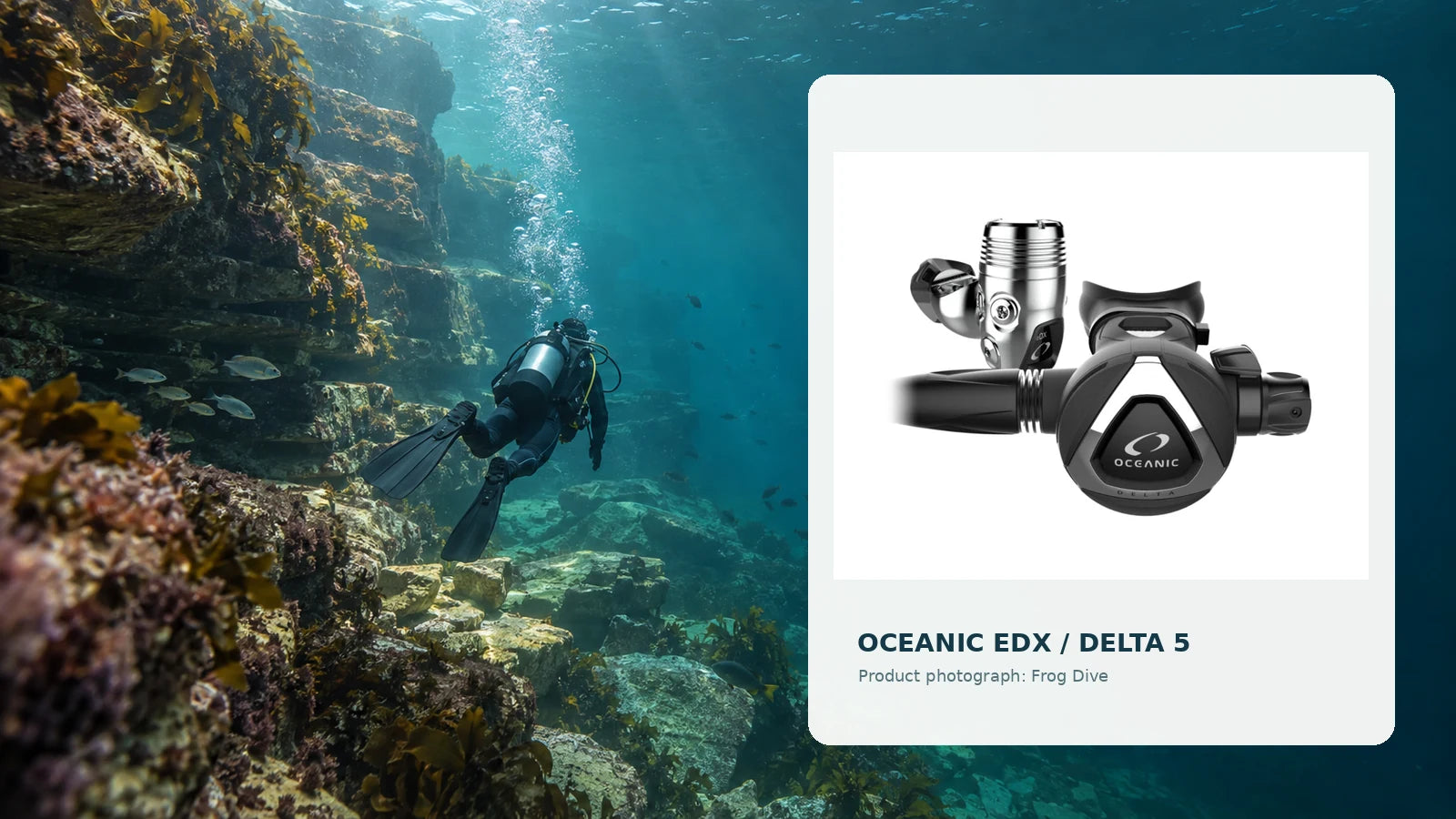
- Newly certified, a few Sydney shore dives a season. Hire first. If you'd rather buy, a balanced set with a diaphragm first stage is a sensible floor. The Ocean Pro Torquay II F300 ($589) has a balanced diaphragm first stage, and the Oceanic EDX / Delta 5 ($899) adds an environmental seal.
- Dives all year, including winter, often from shore. Look for balanced first and second stages and a sealed first stage. The Oceanic FDXi / ZEO and the Atomic B2 with its optional factory seal both fit. The Zeagle F8 has a sealed, balanced diaphragm first stage too.
- Travels to dive. Atomic pitches the stainless steel ST1 as a travel regulator. The Scubapro MK25 EVO sets come in yoke and DIN, which helps when you don't know what tanks the dive operator fills.
The unbalanced piston sets, such as the Oceanpro Keppel F200 and the Ocean Pro F200 / OP20, are the ones to skip if you dive often or deep. They aren't bad regulators. They're simple, easy to look after, and fine for a handful of dives a year.
The most useful next step costs $30. Hire a regulator, dive it at a site you know, then take it back and ask what model it was and how it compares with the ones on your list. You can handle the options in store at Frog Dive in Gladesville, where gear servicing needs no booking, or browse the regulator range online.
Frequently asked questions
How long does a scuba regulator last?
There's no set lifespan to plan around. What decides it is servicing on schedule, and three of the four brands covered here back their regulators with a lifetime warranty. Skip the overhauls on a Scubapro and that cover goes.
Can you use any regulator with Nitrox?
Not for every mix. Plenty are rated to 40% oxygen straight from the box, but anything richer needs a purpose-built Nitrox model, which only connects to Nitrox tanks and goes back for servicing sooner.
What is work of breathing, and does it matter?
It's the effort needed to draw a breath through the second stage. It counts most at depth and on a low tank, where balanced stages hold it level, and a hired regulator is the easiest way to feel the difference for yourself.
Should you buy a regulator before a BCD?
You don't have to. Many divers keep hiring a regulator for a while, since owning one means paying for its servicing, and buy other gear first. Our BCD buyer's guide covers that purchase.