



How to choose a BCD: a Sydney diver’s buyer guide


Most divers buy their first BCD within the first year of getting certified. It is the second-biggest gear purchase after a regulator set, and the choice between jacket, back-inflate, wing and travel is the one that causes the most confusion. Each style exists for a good reason, but which one suits you depends on where you dive, how often, and what you plan to do next.
At Frog Dive in Gladesville, we have been fitting Sydney divers with their first BCDs since 1985. The pattern is consistent. Divers who try a few units on, in the water, end up with a BCD they keep for ten years or more. Divers who buy on price or specs alone tend to replace the unit within two seasons. This guide walks through what each style does well, how to size a BCD properly, and what matters when you are diving in Sydney waters specifically.
Quick reference: which BCD type suits which diver
Use the table below as a starting point, then read the section on the BCD type that looks closest to your situation.
| BCD type | Who it suits | Typical price (AUD) | Why |
|---|---|---|---|
| Jacket BCD | New divers, occasional divers, holiday-only divers | $600 to $1,000 | Familiar feel, sits you upright on the surface, forgiving for beginners |
| Back-inflate BCD | Improving divers, regular Sydney divers, travellers | $900 to $1,800 | Better trim underwater, more comfort, works for cold and warm water |
| Wing and backplate | Tech-curious divers, doubles divers, gear tinkerers | $1,200 to $2,500 | Modular, durable, scales with progression toward technical diving |
| Travel BCD | Divers who fly often, second-BCD buyers | $700 to $1,400 | Light (under 3kg), packs small, made for warm water |


Jacket BCDs
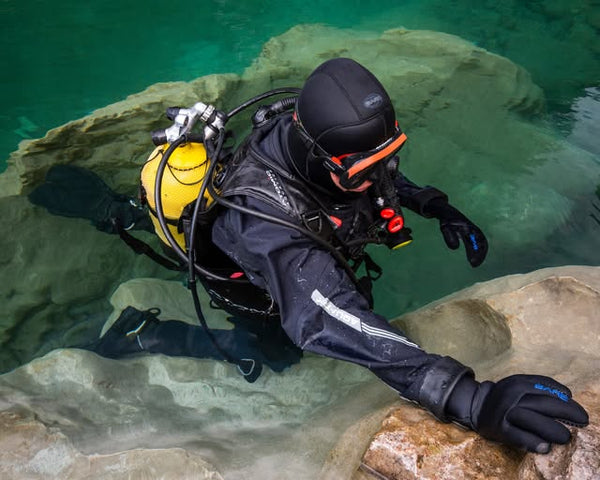
A jacket BCD wraps the air bladder around your torso, like a life vest. Lift sits at the front, sides and lower back. When you inflate at the surface, the unit holds you upright with your face out of the water. This is the style most people learn in, and it is what divers picture when they hear the word BCD.
Jackets are forgiving on the surface, which is the main reason they remain the most common first BCD. Inflated, they push you into a vertical position without you having to think about it. Back-inflate units, by comparison, push your face forward unless you arch your back. For a new diver still building water confidence, that surface stability matters more than spec-sheet differences.
Jackets work well if:
- You dive a few times a year on holiday rather than weekly at home
- You are new to the sport and want familiar handling
- You spend long periods on the surface (boat dives with long surface intervals, instructor work, divemaster training)
- You want one BCD under $1,000 that does most things well enough
A good jacket BCD has lift capacity in the 14 to 18kg range (30 to 40lb), integrated weight pockets that release with one pull, two large utility pockets, and at least four D-rings for clipping accessories. Look for double tank bands, a padded back, and a corrugated inflator hose long enough to reach your mouth without stretching.
The trade-off: jackets squeeze when fully inflated, especially around the chest and shoulders. They also hold you in a slightly head-up position underwater unless you trim them carefully. For Sydney divers wearing a 7mm wetsuit and carrying 12 to 14kg of lead, that squeeze can become uncomfortable on long surface intervals.
Back-inflate BCDs
A back-inflate BCD puts the air bladder behind you, between your back and the tank. The cummerbund and harness sit flat against your torso with no air on the front or sides. Underwater, this position pushes you into a horizontal trim, which is the position you want to be in.
Back-inflate is the style most divers move to within their first 50 dives. The reason is trim. When the air is behind you, your body sits naturally flat in the water. You finn instead of bicycling. You stop kicking up silt. Your air consumption drops because you are moving cleanly through the water instead of fighting your own buoyancy.
Back-inflate works well if:
- You have done 20 or more dives and noticed you struggle with trim
- You dive Sydney sites regularly and want comfort under a 7mm wetsuit
- You travel and dive locally, and you want one BCD that handles both
- You want a unit that will still suit you in five years
The surface trade-off is real but manageable. Inflated at the surface, a back-inflate BCD pushes your face forward. New divers sometimes describe this as feeling tipped. The fix is to relax, lean back slightly, and let the unit hold you. Within a few surface swims, it stops being a problem.
Lift capacity on back-inflate units typically runs 14 to 22kg (30 to 50lb). For Sydney shore diving in a 7mm wetsuit with steel or aluminium tanks, 18kg is plenty. Anything over 22kg is unnecessary unless you are moving toward doubles or technical diving.
A good back-inflate BCD has weight-integrated pockets, replaceable webbing, and a low-profile cummerbund. Some models, the Scubapro Hydros Pro is the obvious example, use modular construction so individual components can be replaced as they wear. That extends the working life of the BCD by years.
Wing and backplate
A wing and backplate is a modular setup. You buy a rigid backplate (steel, aluminium, or composite), a separate harness, and a doughnut-shaped air bladder (the wing) that bolts to the back. Each component is independently replaceable, and each component is independently selectable.
Wings give the cleanest underwater trim of any BCD style. There is nothing wrapped around your torso, no pockets in your line of sight, no cummerbund pinching as you breathe. The harness sits on your shoulders and hips, and the wing inflates only behind your tank. For divers who care about streamlining and air consumption, the difference is noticeable.
Wing and backplate works well if:
- You are heading toward technical, cave, or doubles diving
- You like to tinker with your gear and customise as you progress
- You dive often enough to justify a higher upfront spend
- You want a system that lasts 15 to 20 years with component replacement
Honest framing: this is not the right first BCD for most Sydney divers. The setup takes time to dial in. The webbing harness has no padding and feels stiff until you adjust it correctly. There are no pockets unless you add them. And many wings have higher lift capacity than recreational divers need, which adds bulk in the water for no benefit.
If you are a newer diver who dives a few times a month and has no technical ambitions, a back-inflate BCD will give you 90 percent of the trim benefit without the complexity. Buy a wing when you have a reason to buy a wing, not because the trim photos look impressive.
How to size a BCD
The most common mistake new BCD buyers make is buying online without trying the unit on. Size charts get the rough fit right. They do not account for shoulder width, chest depth, torso length, or how the unit feels with a tank loaded on the back.
A BCD that fits properly should:
- Sit with the top of the air bladder roughly level with the base of your neck (not on your shoulders, not halfway down your back)
- Hold the tank firmly enough that you can shake your shoulders without the tank shifting
- Allow you to clip the cummerbund and shoulder straps with the chest strap fastened, without forcing
- Leave room for a 5mm or 7mm wetsuit underneath without restricting your breathing
Lift capacity is the second piece of the sizing puzzle. Add three numbers to work out what you need:
- Your lead weight: typically 6 to 14kg for Sydney shore diving in a 5mm or 7mm wetsuit, less for tropical diving in a 3mm
- The negative buoyancy of your full tank: an aluminium 80 cubic foot is roughly 1kg negative full, a steel 12L is roughly 4kg negative full
- A safety margin: 4 to 5kg to lift you and your gear at the surface if your wetsuit compresses at depth
For most Sydney recreational divers, that calculation lands between 16 and 22kg of lift. Anything substantially over that is overkill. Anything under leaves no margin if your wetsuit loses buoyancy at depth.
The single best test is to try the BCD in water with the gear and exposure suit you plan to dive. Our heated pool at Gladesville (3 metres deep, 28 degrees) lets you do this without committing to ocean conditions. You can fit the unit, weight up, check trim, and confirm the lift feels right before you take it home.
Weight integrated or weight belt?
Weight-integrated BCDs hold your lead in pockets that clip into the unit and release with a single pull. Weight belts hold the lead on a webbing belt around your hips, separate from the BCD entirely. Both work. The choice comes down to how you carry weight comfortably and what redundancy you want.
Integrated weights are:
- More comfortable on the surface and during long swims (no belt digging into the hips)
- Quicker to set up before a dive
- Easier to ditch in an emergency, since most release with a coloured handle
- Heavier to carry in and out of cars and boats, because the lead is loaded into the BCD
Weight belts are:
- Cheaper (a basic webbing belt with buckles is under $50)
- Independent of the BCD if it fails
- Easier to share or rent to other divers
- Less comfortable on long surface swims, especially with heavy lead loads
Many Sydney divers carry too much lead to fit comfortably in integrated pockets alone. A common setup is 4kg in each integrated pocket and 4 to 6kg on a belt as backup. This distributes the load and gives you redundancy if one system fails.
Travel versus local: one BCD or two?
Sydney shore diving in winter water (14 to 17 degrees) usually means a 7mm wetsuit, a hood, sometimes gloves, and 10 to 14kg of lead with an aluminium tank. That is a heavy, buoyant setup. You need a BCD with enough lift capacity to handle it (16kg minimum, 18 to 22kg comfortably) and enough structure to hold the load steady.
Tropical diving in Bali, Cairns, or the Philippines is the opposite. Water sits at 26 to 29 degrees, you wear a 3mm shorty or skin, and you carry 4 to 6kg of lead. A heavy locally-rated BCD is overkill in those conditions, and the weight counts against you when airlines start charging for excess baggage.
You have two options:
One BCD that does both. A mid-range back-inflate (around 4 to 5kg dry weight) with 18 to 20kg of lift covers Sydney winter and tropical travel reasonably well. You sacrifice a small amount of pack-down size for the convenience of one unit.
Two BCDs. A locally-rated back-inflate or jacket for Sydney, plus a dedicated travel BCD (under 3kg, often a slim back-inflate or hybrid design) for flying. This makes sense once you are flying internationally to dive twice a year or more.
For most divers, one BCD is enough until they hit that flying frequency. A dedicated travel BCD is a sensible second purchase, not a sensible first one.
How long a BCD lasts and what to check on a second-hand unit
A quality BCD lasts 10 to 15 years with annual servicing. The bladder, dump valves, inflator and integrated weight pockets all wear at different rates, and a service technician can replace each component without scrapping the unit. Modular designs (wings, and units like the Scubapro Hydros Pro) can run 20 years or more because every part is replaceable.
Second-hand BCDs are a legitimate option, but check three things before you buy. First, bladder integrity: inflate the unit dry and listen for leaks for 24 hours. Second, inflator function: it should both add and dump air cleanly with no sticking. Third, webbing condition: any fraying near the load-bearing stitch points means walk away. A BCD serviced annually by a registered technician will have a complete service history. One that has not been serviced in five years is a project, not a bargain.
If you bring a second-hand unit into the shop, we can pressure-test the bladder and inspect the valves before you commit. It takes about 15 minutes and saves you buying a unit that needs $400 of work to be safe.
Where to try BCDs in Sydney
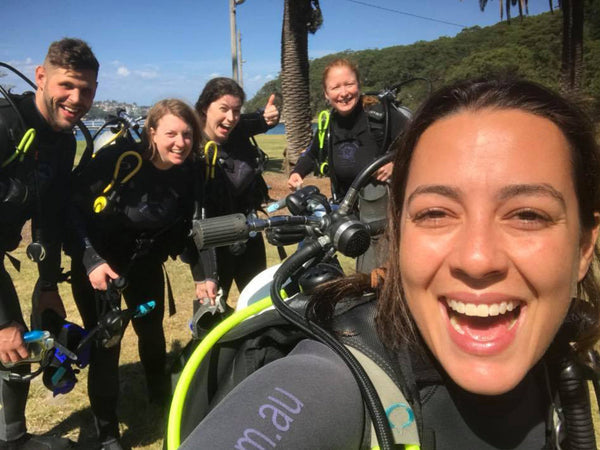
If you are shortlisting BCDs, come into the Gladesville shop and try them on with a tank. We carry jacket, back-inflate, travel and wing setups across Scubapro, Oceanic, Oceanpro and Halcyon, and we run free in-store fittings. If you want to test a unit underwater before you buy, our heated pool gives you a real trim check without booking a charter or driving to a shore site. Dive instructors are on the floor most days, so you can walk in with questions and walk out with a BCD that fits the way you dive.
BCD frequently asked questions
How much lift do I need in a BCD?
For most Sydney recreational divers, 16 to 22kg of lift is the right range. Add your lead weight, the negative buoyancy of your full tank, and a 4 to 5kg safety margin. Anything substantially above that figure adds bulk to the unit without giving you useful capacity.
Can I use the same BCD for cold water and tropical diving?
Yes, with one caveat. A mid-range back-inflate BCD with 18 to 20kg of lift handles both reasonably well. The compromise is weight in your luggage when you fly. If you fly internationally to dive twice a year or more, a second dedicated travel BCD becomes worth the spend.
How long should a BCD last?
A well-made BCD lasts 10 to 15 years with annual servicing. Modular designs like wings and the Scubapro Hydros Pro can run 20 years or more because individual components (bladder, valves, harness, weight pockets) can be replaced as they wear. A BCD that has never been serviced is unlikely to last beyond five or six years regardless of brand.
Are travel BCDs worth it?
For divers who fly to dive twice a year or more, yes. A travel BCD weighs under 3kg dry, packs to roughly a third of the volume of a standard BCD, and saves baggage charges over a few trips. For divers who fly once a year or less, a mid-weight back-inflate covers both local and travel diving without the cost of a second purchase.