



Why you need boots to dive in Sydney


If you learned to dive in Thailand, Cairns, or Fiji, you probably wore "Full Foot" fins.
These are the fins you wear barefoot. You slip them on like a shoe. They are light. They are comfortable. They are perfect for walking across a white sandy beach or jumping off a boat into warm water.
Then you come home to Sydney. You buy a pair of the same fins. You head to Shelly Beach or Bare Island. And you realize you have made a painful mistake.
Sydney is a shore diving city. Our shorelines are not made of soft sand. They are made of sandstone. They are covered in oysters and sea urchins.
To dive here safely, you need to change your footwear.
The geography of a Sydney entry
Most of Sydney’s best dive sites require a "rock entry."
At Oak Park in Cronulla, you have to walk across a rock shelf. It is often slippery with algae. At Bare Island in La Perouse, you scramble over uneven terrain to get to the water's edge. Even at Shelly Beach in Manly, the entry involves stepping over rocks and broken shells.
If you are wearing Full Foot fins, you have to walk to the water's edge barefoot. You are exposed to sharp rocks. You risk stepping on bluebottles or glass.
Or you try to walk in flip-flops. But then you have nowhere to put them when you get in the water.
The Open Heel solution
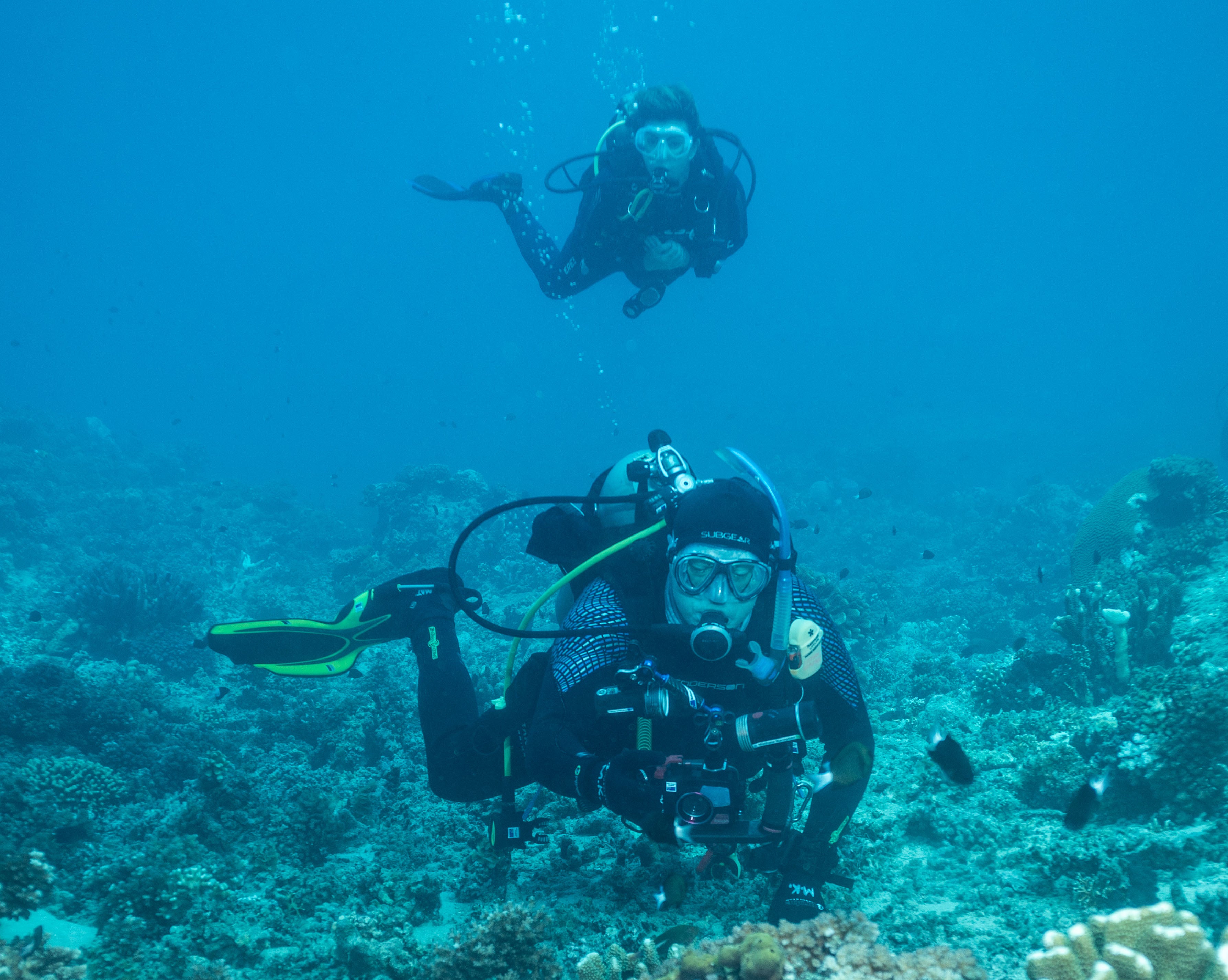
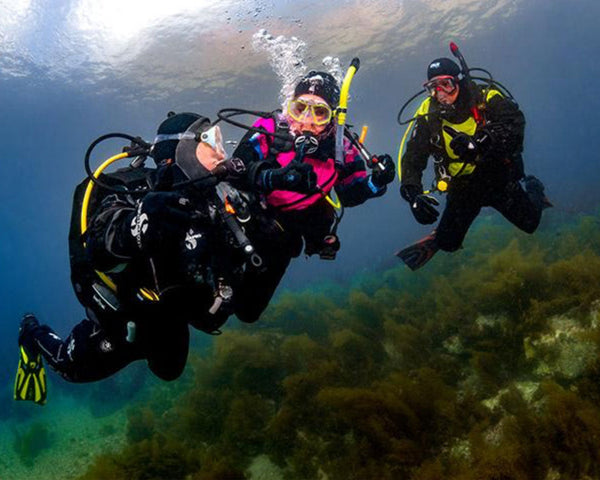
The standard setup for a Sydney diver is the Open Heel Fin paired with a Neoprene Boot.
The boot (or "bootie") has a thick rubber sole. It acts exactly like a sneaker. You put your boots on at your car. You can walk comfortably down the footpath. You cross the hot car park asphalt. You walk straight across the rocks.
Your feet are protected from cuts. You are safe from burns and urchin spines.
When you get to the water, you simply slide your booted foot into the fin. You pull the strap over your heel. You don't need to balance on one leg trying to remove a flip-flop.
Thermal protection
There is a second reason we use boots here. It is the cold.
In Fiji, the water is 28 degrees. In Sydney, it ranges from 16 degrees in winter to 23 degrees in summer.
You lose a significant amount of heat through your extremities. A Full Foot fin leaves your foot exposed to the cold water. A 5mm Dive Boot keeps your feet warm. This keeps your whole body warmer for longer.
Making life easier
If you want to make the transition even smoother, consider upgrading to Spring Straps.
Standard rubber straps can be hard to pull on when you are bobbing in the waves. A spring strap is made of steel coil. It stretches open. It snaps back instantly. It means you can get your fins on in seconds without adjusting buckles.
Once the dive is done, throw your wet boots and fins into a Mesh Gear Bag. It lets the water drain out. You don't fill your car boot with salt water.
Make the walk easy
If you are only ever going to dive off a boat in the tropics, Full Foot fins are fine. They are lighter to travel with.
But if you want to explore the world-class shore diving we have right here in Sydney, you need boots. They turn a painful, teetering entry into an easy walk.


Frequently Asked Questions
Do boots fit all fins? No. You cannot wear boots with "Full Foot" fins. There isn't enough room in the foot pocket. You must buy Open Heel Fins. These have a larger pocket and an adjustable strap.
How thick should the boots be? For Sydney, a 5mm boot with a hard sole is the standard. This offers the best balance of warmth and protection for walking on rocks.
How do I stop them smelling? Boots stay damp longer than wetsuits. This can lead to that "old gym sock" smell. We recommend washing them regularly with a Wetsuit Shampoo like Gear Aid Revivex. It kills the bacteria rather than just masking the odour.
Do they cause blisters? Actually, they prevent them. A good boot fits snugly like a sock. It stops the rubber of the fin rubbing directly against your skin.