



Choosing your first speargun: band or pneumatic, and what length for NSW


You have snorkelled off the Sydney coast a few times, and now you want to hunt. The guns on the rack run from $155 to over $900. Nothing on the label tells you what the extra money buys.
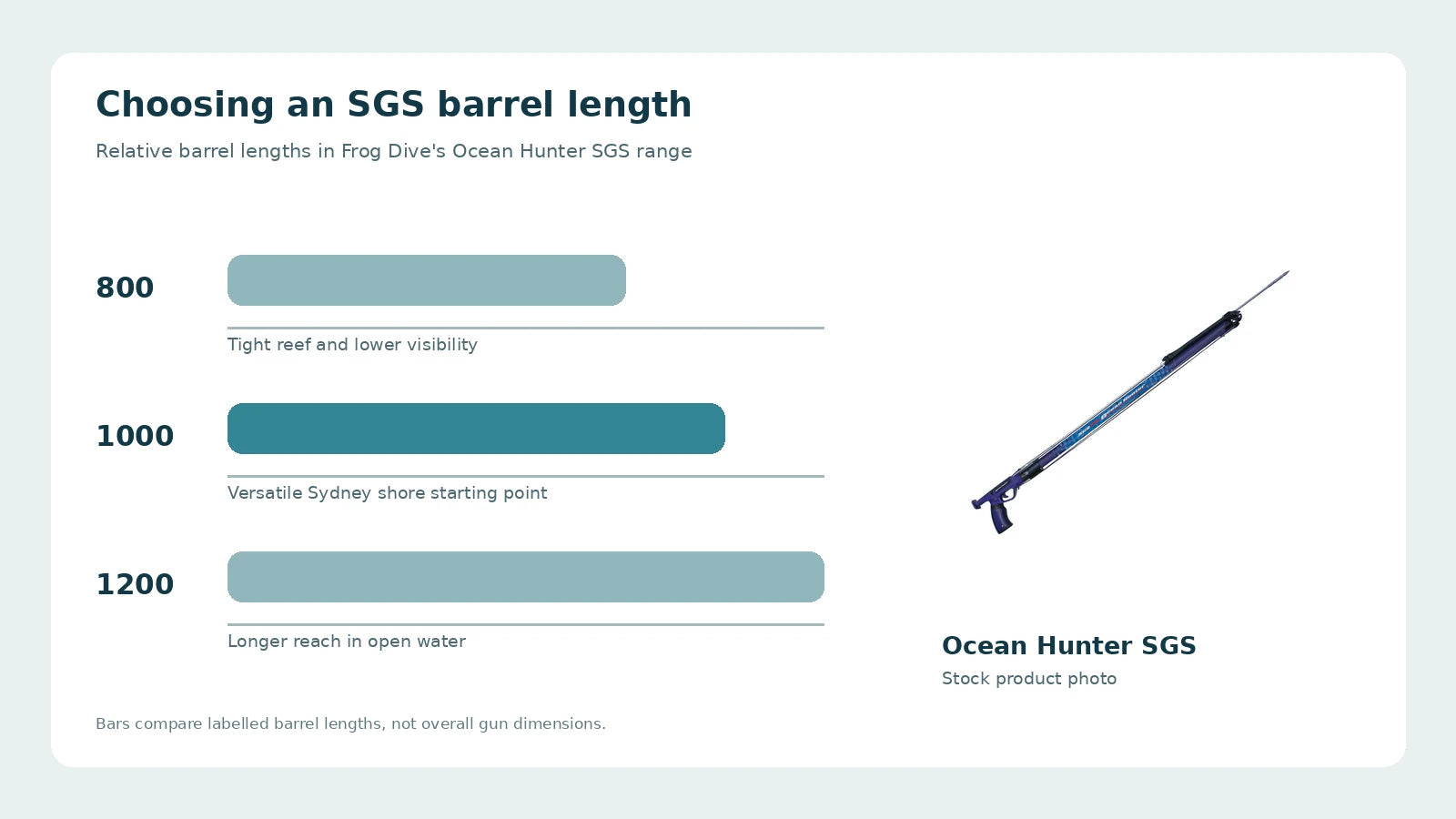
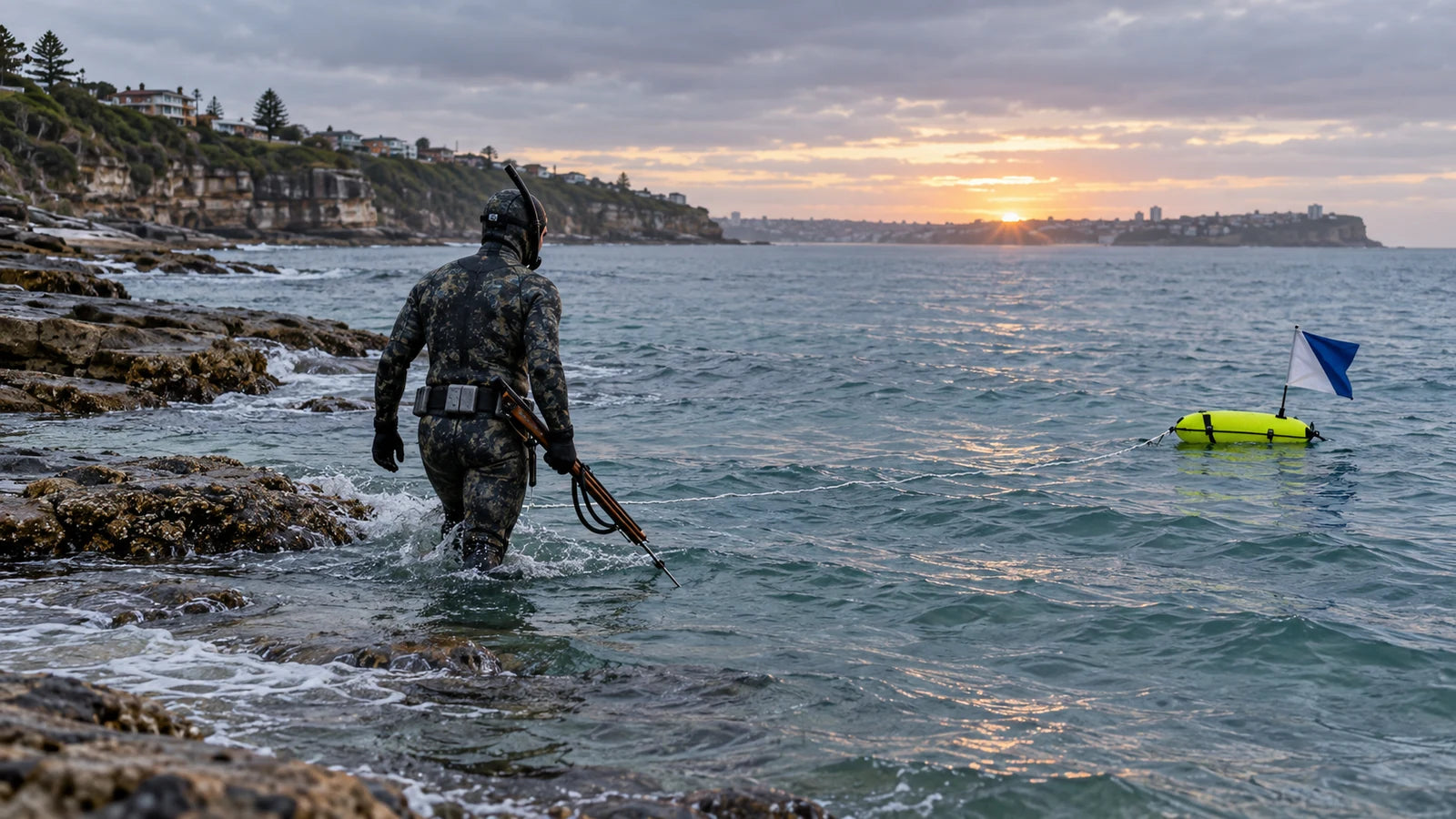
For a first speargun in NSW, a band-powered railgun around 1000 covers most of what a beginner shoots off Sydney. A 1000 means a 1 metre barrel. It loads without a fight, and a torn rubber can be replaced at the water's edge with no tools. Drop to 750 or 900 for tight reef and dirty water. A pneumatic is shorter for the same power and can be turned down, but it runs on compressed air and depends on seals.
Band or pneumatic: what is the difference?
The difference is where the gun keeps its energy. A band gun holds it in stretched rubber. A pneumatic holds it as compressed air, sealed inside the barrel that the spear sits in.
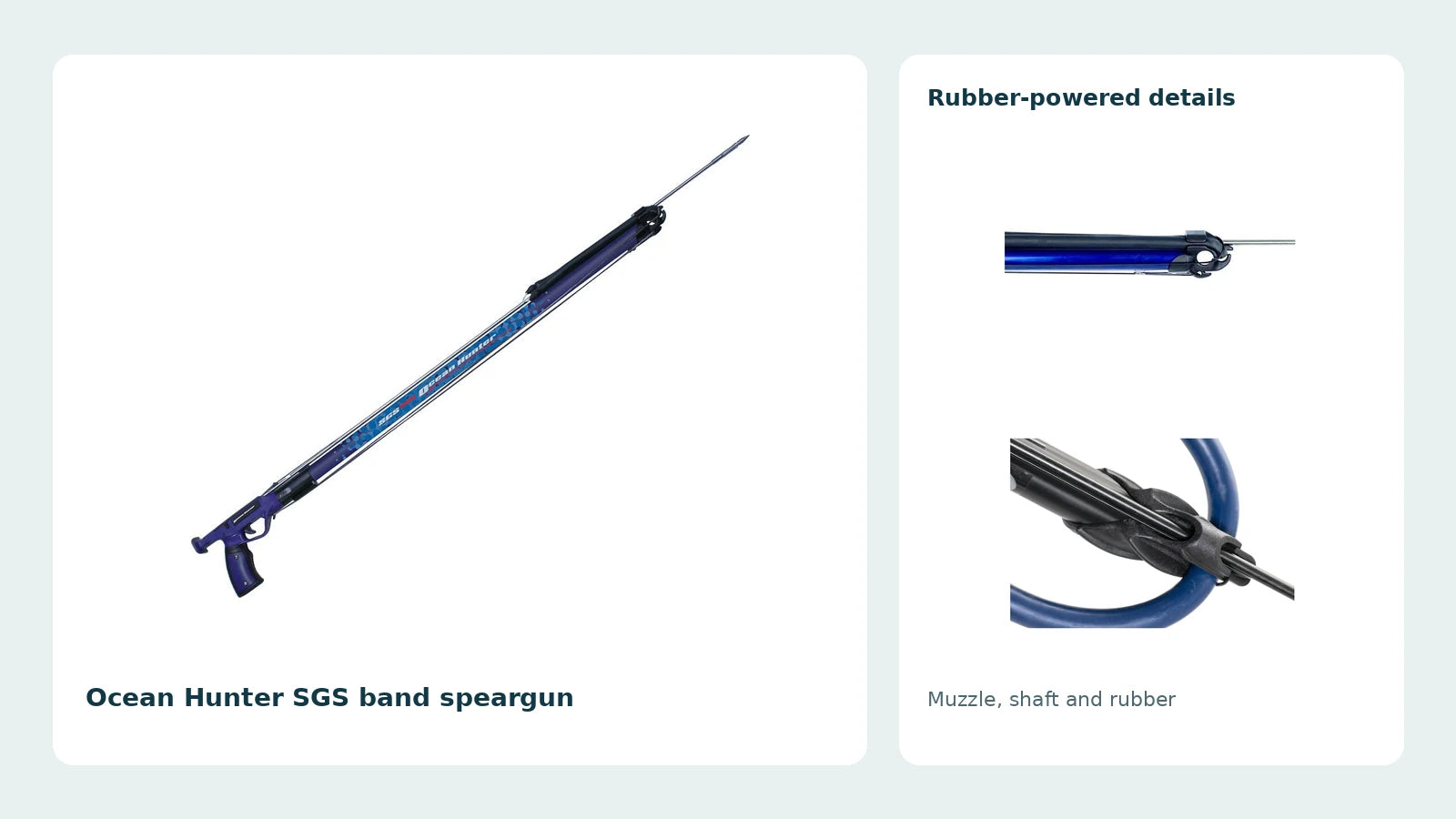
On a band gun you do the work before every shot. The rubber is a thick loop with a cord bridle at its centre. You pull it back over the loading plate and hook the bridle into a notch on the shaft, which is the steel spear itself. It is a weapon from the moment the rubber is on, so it points at the water and nowhere else. Most beginner guns sold here are railguns, meaning a rail along the barrel guides the shaft out straight. Railgun describes the barrel, not the power source, so a railgun is still a band gun.
A pneumatic arrives from the factory already charged with air. Loading pushes a piston down the barrel and squeezes that air until a catch hook holds it. The trigger lets it go. Mares' own manual for its Cyrano pneumatics describes it that way.
What goes wrong is different too. A band perishes and tears, and the diver replaces it. A pneumatic's pressure sits behind seals. Mares says a gun needing constant repressurising usually has a damaged O-ring, and should go to an authorised repair station.
There is a third way in, and it is not a gun. A handspear is a two-piece fibreglass shaft with a barbed head and no power source, at $60. It gives you no reach, so the fish has to be within arm's length plus the shaft.
What length speargun should you start with?

A 1000 is the right first gun for Sydney shore diving. The number on the box is the barrel in millimetres, so a 900 is a 90cm barrel.
Short guns, 600 to 900, suit tight rocky ground and dirty water. In close you want a gun that swings quickly and does not foul on kelp or a ledge. Past 1100 a gun gets harder to load and clumsy in shallow reef and surge. The long ones belong later, with open water and bigger fish.
Read the rules before you buy, because where you may dive shapes what you need. Spearfishing here is done on a single breath, so the gear and the rules both differ from scuba. Our guide to spearfishing in NSW covers the fee, the closures and the protected species.
Are pneumatic spearguns good for beginners?
Usually not as a first gun, and the reason is ownership rather than performance. A pneumatic speargun, also sold as an air speargun, does two things a band gun cannot.
The first is size. Mares' pneumatic barrels run from 55cm to 120cm, so the power comes in a shorter gun. That helps in tight reef and poor visibility. The second is control. The Cyrano guns carry a power lever, so you can turn the power down for smaller fish at close range.
The case against is what owning one asks of you. Mares' manual gives a factory charge of roughly 15 to 23 bar, depending on length. It sets a hard ceiling of 30 bar, with an explosion warning attached to it. Recharging is done with a hand pump, and the manual's table gives the counts. A completely empty 550 model takes about 250 strokes to reach 20 bar, and the 1100 takes about 700.
Pneumatics are also stored muzzle down and handle up, so oil in the barrel keeps the piston lubricated. None of this is difficult. It is more to stay on top of in a first season, and none of it can be fixed on the rocks. Those numbers are Mares' numbers for one family of guns, and other makers set their own.
What do speargun rubbers do, and when do you replace them?
The rubber is the engine of a band gun. Speargun rubber is sold by thickness and by length, and both change how the gun behaves. A thicker rubber stores more energy and takes more effort to stretch, so power and loading effort move together.
Rubbers are matched to the barrel. The pre-made gun rubbers come in 14mm and 16mm at $39. Each length is labelled for the gun it suits: 44cm for a 600 to 700, 55cm for an 800 to 900, 61cm for a 1000, 66cm for an 1100 and 72cm for a 1200. Order by the millimetre size and the length.
A rubber is a consumable, like a tyre. Rubber that has gone off looks chalky, cracks at the ends and feels dead when you stretch it. That is the point to change it, not the dive after it snaps.
Changing one takes no tools. You unscrew the bridle and thread the new rubber through the muzzle, the open end at the front of the barrel. Then you tie the bridle back on with a double sheet bend knot. Carry a spare set, and a torn rubber costs you ten minutes instead of the day.
Do you need a reel on your first speargun?
Not for shore diving around Sydney. A reel is a spool that bolts to the gun and holds line, so a fish that runs stays joined to the gun. A float line does the same job differently. It ties the gun to a float on the surface, and the float wears the fish down for you.
For a beginner on rocky shore ground, the float line is the usual answer. It also does a second job, because the flag on the float shows other water users where you are. The complete beginner package comes with a float, a flag and a 10m float line.
A reel earns its place in deeper open water, on bigger fish away from the bottom. That is a second-gun problem. Start with the float line and put the difference towards a spare rubber.
What else do you need before the gun is usable?
A speargun on its own will not get you in the water. You need a float and flag so you can be seen, and a float line to join the gun to it. A weight belt holds you down at depth, and a knife stays within reach. Gloves save your hands on rock and on the catch.
Then the swimming gear: a mask and snorkel, long fins, and a wetsuit. Sydney water sits between 14 and 17 degrees in winter. The beginner spearfishing packages bundle the gun with the gear around it. The complete one covers everything on this list except the gloves, and costs less than buying those pieces one at a time.
Which first speargun suits which spearo?
The right first gun follows how much you already do in the water, not the price tag.
- Never spearfished, and wants to try it off Sydney shore ground. The entry gun is $155 in a 1000 and does the job while you learn. If you own no other gear, the complete beginner package at $799 covers the gun and everything around it. Doing the workshop first is a fair call, because you handle a range of gun sizes before spending anything.
- Snorkels and free-dives already, and wants a gun that will last. Step up to a railgun in a 1000 with an aluminium barrel rather than plastic. The Redback is $225 and the Rob Allen Scorpia is $399. Rob Allen pitches the Scorpia as an entry level gun in aviation grade aluminium, built for shore divers who knock their gear about.
- Diving tight reef in poor visibility. A 750 to 900 is the right tool rather than a compromise. The entry gun comes in an 800, the Redback starts at 900, and the Scorpia comes in 70, 80 and 90cm.
No single model is the best first gun. Look through the speargun range with those three profiles in mind, and choose for the ground you will dive.
The last part is hard to do online. Take a gun off the rack at the Gladesville counter and see whether a 1000 sits right in your hands. Or book the Spearfishing Workshop first, two days over one weekend at $595, where the second day puts you in the water with a gun. One thing worth knowing before you order a package: the standard gun in both is a 1000, and Frog Dive will swap it for another size free of charge.
Frequently asked questions
Can you use a speargun on scuba in NSW?
No. Spearfishing in NSW is a breath-hold sport, and a speargun may not be used with SCUBA, hookah or any other compressed air supply. You hold your breath, or the gun stays at home.
How long does a speargun last?
No part of it has a fixed life. The rubber is the item that gets used up, the shaft can be swapped if it bends, and an aluminium barrel takes years of rough entries. Buy for the ground you dive rather than for how many seasons the gun will see.
Do you need a licence to buy a speargun?
The question many people are really asking is what they need before they can spearfish. In NSW that is the recreational fishing fee, and our NSW guide, linked earlier, sets out who has to pay it and how you get one.
Is a handspear a sensible way to start?
For $60 it answers a fair question: do you enjoy hunting fish at all? With nothing to power the shaft, every fish has to be stalked to touching distance, which builds a skill the gun cannot teach you. Treat it as a way in rather than as a replacement for a gun.