



Shore dive or boat dive: choosing your first Sydney ocean dive


Saturday morning on the Northern Beaches, and the car park at Shelly Beach is already half full by seven. Wetsuits are being pulled on over goosebumped skin. Tanks clank against tailgates. A couple in matching rashies study the water, trying to read the swell. Somewhere nearby, a first-timer is wondering the same thing every new Sydney diver wonders: should I walk in from the shore, or should I be on a boat?
It is a fair question, and the answer matters more than most people think. Sydney is not Cairns, and it is not Koh Tao. The water is cooler, the visibility is often lower, and some sites are more exposed to weather and swell than anything a newly certified diver has seen on a tropical holiday. The right first dive is the one that gives a diver less to manage at once, and for most people stepping into Sydney waters for the first time, that points toward shore.
Why shore diving tends to come first
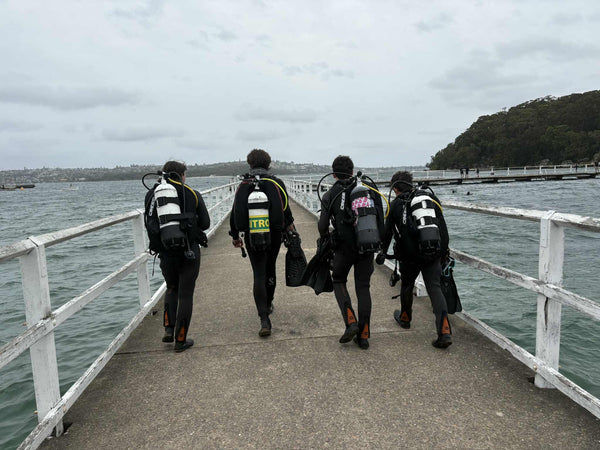
The case for a shore dive as a first Sydney ocean experience is not about shore dives being inherently easier. Some shore sites are demanding. It is about simplicity. A shore dive strips out the surface-level logistics that can rattle a new diver before they even get wet: no fixed boat departure to stress about, no moving deck while gearing up, no ladder reboard to think about while trying to manage buoyancy at the end of a dive.
That leaves more mental room for the things that matter early on: getting comfortable in a thicker wetsuit, adjusting to reduced visibility, and learning how Sydney conditions feel compared to a resort pool or a tropical reef.
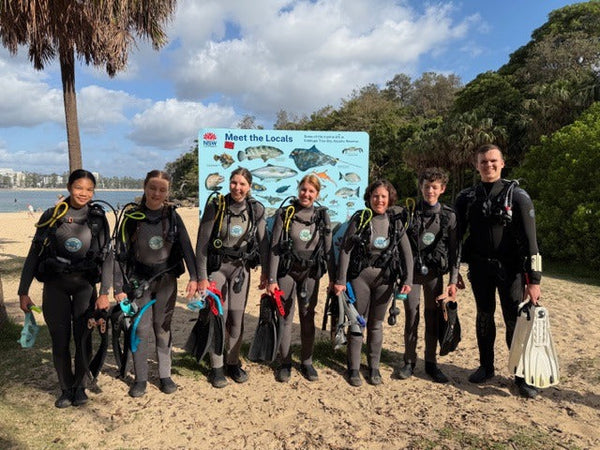
Frog Dive classifies its dive sites into Green and Orange levels. Green Level sites are the beginner-friendly ones, with easier entries and exits and less dependence on tide and weather windows. Orange Level sites are more demanding. For a first ocean dive, Green Level is the starting point.
When a boat dive still makes sense
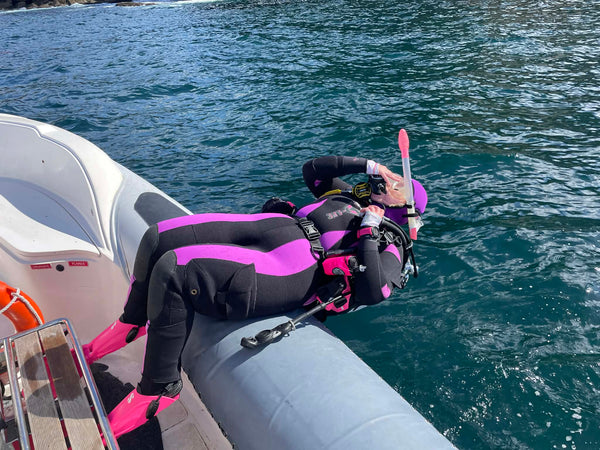
None of this means boat diving is the wrong call. A double boat dive can be a perfectly good first Sydney ocean experience for a diver who is current on skills, comfortable in their gear, fine on boats, and unbothered by fixed departure times and reboards. The difference is that a boat dive adds layers. If those layers feel manageable, there is no reason to avoid it. If they feel like one thing too many on top of cold water and new conditions, shore diving removes them from the equation.
At Frog Dive, we recommend doing at least one shore dive before stepping onto a boat, particularly for divers who have never dived in Sydney. That recommendation exists because local conditions can surprise people who learned to dive somewhere warmer and clearer.
The 12-month rule
One policy is worth knowing before booking anything. Divers who have not been in the water in the past 12 months need to complete a refresher course before joining a guided shore dive. That is not a suggestion. It is a prerequisite, and it exists for good reason. Scuba skills are perishable. A year away from diving is enough time for muscle memory to fade and for emergency responses to feel unfamiliar. The refresher rebuilds both the knowledge and the water confidence a diver needs before heading into Sydney’s ocean.
Choosing the right entry point
For a diver who is current on skills and wants the simplest possible first Sydney dive, a Green Level shore site from the dive calendar is the most straightforward option. Walk in, dive, walk out. No extra variables.
For someone who wants a hand choosing the right site and some local knowledge in the water, a private guided shore dive pairs the diver with a guide who selects the site based on the diver’s experience, the conditions, and the day’s weather. It is the middle ground between full independence and a structured course.
For anyone who has been out of the water for a year or more, the refresher comes first. Everything else follows from there.
And for divers who have not yet certified, the starting point is a PADI Open Water Diver course, which Frog Dive runs with small class sizes and pool sessions at their Gladesville facility before any ocean dives.
At a glance
|
Option |
Best suited to |
Key requirement |
|
Green Level shore dive |
Current divers wanting the simplest first Sydney ocean dive |
Confirm the site is Green Level and matches comfort level |
|
Private guided shore dive |
Divers wanting local guidance on site selection |
Must have dived within the past 12 months |
|
Ocean refresher course |
Divers returning after 12 months or more out of the water |
Complete refresher before any ocean diving |
|
Double boat dive |
Current, organised divers comfortable with boat logistics |
Certification, pre-arranged hire gear, SMB and whistle |
The honest answer
The best first Sydney ocean dive is whichever one lets a diver focus on the diving rather than the logistics around it. For most people, that is a shore dive at a Green Level site. For some, it is a guided session with someone who knows the local waters. For a smaller number, a boat dive fits from day one.
The only wrong answer is the one that puts a diver in over their head before they have had a chance to settle into how Sydney’s ocean feels. Cold water, reduced visibility, and unfamiliar conditions are manageable. They just deserve respect, and the easiest way to give them that respect is to keep the first dive simple.
FAQs
1. Is a shore dive always easier than a boat dive in Sydney?
No. Some shore dives are beginner friendly with easier entry and exit, while others are more challenging and more dependent on weather and tide. The better first dive is the one that best matches your comfort, recent experience and the conditions on the day.
2. What do Green Level and Orange Level dives mean?
On Frog Dive’s Diving Sites List, Green Level dives are described as beginner friendly with easier entry and exit, while Orange Level dives are described as better with some experience and can have more challenging entries and exits.
3. Should I do a shore dive first if I have never dived Sydney before?
Frog Dive’s Double Boat Dive page says that if you have never dived Sydney before, it strongly recommends doing a shore dive first before a boat dive.
4. What if I have not dived for more than 12 months?
Frog Dive’s Private Guided Shore Dive page says that any diver who has not dived for the past 12 months must undertake a refresher course or scuba skills session first.
5. When does a guided shore dive make sense?
A guided shore dive makes sense when you want help choosing a site that suits your experience level and want a supported way back into local diving. Frog Dive says it can suggest the best spot based on your experience level.
6. Where can I check upcoming shore and boat dives?
Frog Dive’s Dive Calendar lists its shore and boat diving schedule, along with day and weekend diving getaways.
7. What should I check before booking a boat dive?
Frog Dive’s Double Boat Dive page says divers should bring their certification card for verification, arrange any gear hire in advance, and carry an SMB and whistle during dives.